PINNACLE COUNSELING AND TESTING CENTER

We specialize in psychological testing and the treatment of anxiety, trauma, depression, and stress to help you reach peak mental health performance

(951) 396-5701

41856 Ivy Street, STE 205, Murrieta, CA 92562

Bryce Gosney Bryce Gosney

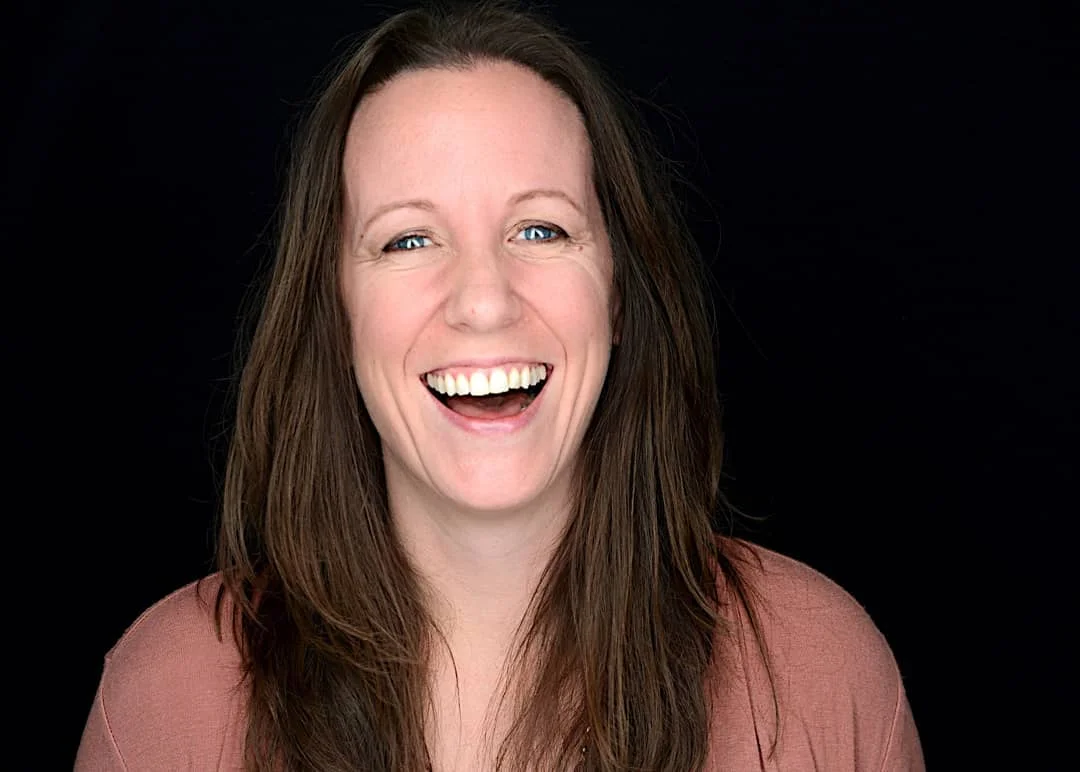
Dr. Gosney Featured in SDVoyager Magazine!

Dr. Clarissa Gosney, PsyD was featured in SDVoyager Magazine to highlight her work with treating anxiety and selective mutism.

Dr. Clarissa Gosney, Licensed Psychologist and Founder of Pinnacle Counseling and Testing Center, was interviewed by SDVoyager Magazine and has been featured in their “San Diego’s Most Inspiring Stories” column!

By referral from a client’s mother, Dr. Gosney was sought out by SDVoyager Magazine to highlight the amazing work that she and her other clinicians at Pinnacle Counseling and Testing Center are doing to help children, adolescents, and adults reduce their anxiety through Evidence-Based Treatment. In the interview, Dr. Gosney talks about one of Pinnacle’s specialized treatments, PCIT-SM, CBT, and Exposure Therapy with clients with Selective Mutism and the positive impact the treatment has not only on the clients, but on the clients’ families as well!

The article also highlights VERY exciting news about a new program that Pinnacle Counseling and Testing Center will begin this summer! Read the article to learn more. You won’t want to miss it! Climb on.

Read More
Bryce Gosney Bryce Gosney

Doubt and Dysfunction in OCD

Johns Hopkins Medicine recently highlighted Gerald Nestadt, Psychiatrist, who has studied and treated patients with OCD for the past 30 years. He has found strong evidence for a biological basis for OCD, while he acknowledges that one’s environment also plays a role. Recently, Gerald Nestadt has been studying the role of doubt in OCD. He has found that the more self-doubt one has, the more dysfunctional their OCD tends to be. For instance, one does not simply act on an obsessive thought (compulsion) for the sake of performing the act, but out of their own self-doubt that they had performed the act correctly or thoroughly enough.

We know that with OCD, the behaviors (compulsions) are performed in an effort to reduce one’s own anxiety. This may work for the short-term, but anxiety is not decreased overall unless the person is able to resist acting out on their compulsions. At Pinnacle CTC, we guide clients through this process by using Exposure with Response Prevention (ERP). ERP is not only effective in the treatment of OCD, but for many anxiety disorders as well.

Learn more about the Conditions We Treat and other information on the Evidence-Based Treatment modalities we offer at both our San Diego and Murrieta, CA offices.

Read the full article.

Read More
Bryce Gosney Bryce Gosney

Our First SM Group Intensive was a Success!

Our first SM Group Intensive Session was a success!

Today, we successfully ran our very first 4-hour intensive group session in Murrieta, CA for clients with Selective Mutism. Prior to coming to Pinnacle Counseling and Testing Center for therapy, many of these children did not speak to other adults outside their home. It was SO wonderful to see these kiddos not only talking with new peers and new adults (counselors), but also sharing with the group, offering each other instruction, asking for help, and even singing and dancing!

We want to give a special thanks to these wonderful counselors who helped guide our clients in their Brave Talking today!

We are excited to begin planning our next intensive!

Read More
Bryce Gosney Bryce Gosney

Secondary Emotions

Secondary emotions Dr. Gosney

Anger is often considered a secondary emotion because it is used as an attempt to protect ourselves against feeling or showing primary emotions such as sadness, grief, fear, and anxiety.  We may unintentionally hurt others as a form of self-protection.  Only when we decide to take off the mask of anger can we allow ourselves to begin to heal.

The next time you find yourself angry, I challenge you to look beneath the surface.  Are you feeling embarrassed?  Disrespected?  Undervalued?  Afraid?  Open yourself up to learning more about the real you, and let the healing begin.

Read More
Bryce Gosney Bryce Gosney

"Anxiety is the work of a strong, healthy brain that’s a little overprotective" - Karen Young

"Anxiety is the work of a strong, healthy brain that’s a little overprotective." - Karen Young

I recently came across a really great article about anxiety in Kids and Teens that aligns very closely with our first blog post, which you can read here.

"Anxiety is the work of a strong, healthy brain that’s a little overprotective" - Karen Young

In this article, found on the website 'Hey Sigmund,' Karen Young does a great job of explaining what parts of the brain are involved in anxiety, and what kids, teens, and parents can do to help.  It is a must-read for parents of anxious children or teens, and can also be used as an excellent psycho-education tool for therapists working with children and adolescents.  

Often times, kids and teens don't know that they are anxious... They just know that they feel really bad.  They may think they are sick.  They may think nobody likes them or wants to be their friend.  They may feel like they can't do anything (or many things) right.  It may be easy for them to give up, or to avoid the risk of failure by not even trying.

For parents of anxious children or teens, they may not know how to handle the refusal, the avoidance, the tantrums or arguments, and the pleading to stay home from school.

There are very important skills that children, teens, and parents can learn in therapy to help manage anxiety.  Still, if a child or teen spends 1 hour a week in counseling, that's 167 hours spent in other environments throughout the week.  It's no wonder why practicing skills outside of session is so important for success in managing anxiety!  This is why the role of parents and schools is so important in creating successful treatment outcomes.  At Pinnacle Counseling and Testing Center, we believe the role of parents, teachers, and other mentors is crucial.  Therefore, not only are anxiety-management skills learned and practiced in session with the child or teen, but these skills are then are taught to parents (and teachers and other mentors, where applicable) so that progress can continue to be made between sessions.

If you believe that you, or your child or teen may have anxiety, and you are looking for skills and support, please contact us here for your free consultation.

Read More
Bryce Gosney Bryce Gosney

Could your child have anxiety? How anxious children are often mislabeled and lost in the mix.

There is no age limit on stress and anxiety.  The truth: anxiety looks different in kids!  Anxious children are often mislabeled and misdiagnosed (and sometimes inaccurately medicated).  Here, you can learn how anxiety, trauma, or stress may look in a child.  This information is not just for parents, but can be extremely helpful for educators!  Feel free to share with a parent or educator you know.

There is no age limit on stress and anxiety.  While some parents have always seen their child as a “worrier,” some families are noticing the effects of stress on their child for the first time.  Still, some children may only have experienced anxiety after a trauma or other high-stress event.

The truth: anxiety looks different in kids!  Children who are affected by anxiety and stress are often mislabeled and misdiagnosed.

HOW ANXIETY, TRAUMA, OR STRESS MAY LOOK IN A CHILD

An anxious child may be seen as:

THE COOL KID

Damian is the “cool kid” in class.  His teacher reports that he refuses to complete school work and spends much of class time socializing with his friends.  When his teacher talks to him after class, he is like a completely different student: compliant, friendly, apologetic, and perhaps a bit embarrassed.  While on the outside Damian may seem like a student who doesn’t care about school, his fear of criticism from his peers takes precedence.  He fears that his friends will tease him if he gets good grades.

THE PERFECTIONIST

Sarah is a good student who follows the rules of the classroom.  While she gets excellent grades on her assignments, you won’t find her raising her hand when the teacher asks for a volunteer.  Sarah fears humiliation at the risk of saying or doing something wrong.  As a result, she refuses to try things unless she can be certain of success.  Maria can also be found spending much more time than is expected to complete various school assignments, often resulting in staying up late.  In the morning, Sarah finds it difficult to get moving because she is so tired, and may even miss school that day.

THE SHY ONE

At school or in the community, Anthony finds himself frozen; unable to speak.  Feeling the need to protect her child from discomfort, and not wanting to make others feel uncomfortable when he stares blankly or hides in response to their greetings, Anthony’s mother often explains that he is “shy.”  However, he is very talkative and even a bit high-energy when at home with his family or with close friends.

THE TUMMY TROUBLED

Maria has a few close friends at school, but they aren’t in many of her classes.  In her eyes, everyone in her math class is surrounded by their friends and she feels completely left out.  Whenever her teacher announces that it’s time to work with a partner or in groups, Maria feels sick to her stomach and asks to go to the nurse’s office.  Maria’s tummy troubles increase throughout the school year and, despite being seen by a number of different medical specialists, there is no medical explanation for her pain and discomfort.  On the weekends, her symptoms improve.  When Monday morning comes, however, Maria’s symptoms reappear and she pleads with her parents to let her stay home. Her school has expressed concern over the number of absences she has had.


How We Can Help

At Pinnacle Counseling and Testing Center, we take the time to complete a comprehensive evaluation of each client so that we can provide accurate and effective treatment to help children manage their symptoms so that they can get back to school, and back to being a kid!  We also understand the value of family, so parents will always have involvement in our therapeutic work together.  This way treatment can continue at home, increasing the likelihood for lasting results with symptom reduction, helping your child reach peak mental health performance.  Climb on.

If you think your child might be experiencing anxiety or stress, click HERE to schedule a comprehensive intake session.

- Clare Gosney, PsyD, Pinnacle Counseling and Testing Center

Read More